An accurate and fast point-of-care test for detecting a common form of nerve degeneration called peripheral neuropathy.
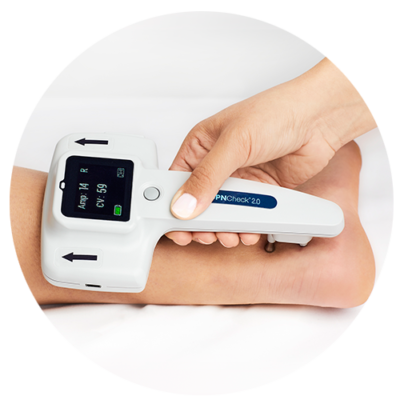
READ MORETo learn more visit the DPNCheck websiteDPNCheck is a fast, accurate, and quantitative nerve conduction test that is used to evaluate nerves for evidence of peripheral neuropathy, such as diabetic peripheral neuropathy (DPN). It is designed to be used by clinicians at the point-of-care to objectively detect, stage, and monitor. The device measures nerve conduction velocity and response amplitude of the sural nerve, a nerve in the lower leg and ankle. These parameters are recognized as sensitive and specific biomarkers of peripheral neuropathy.
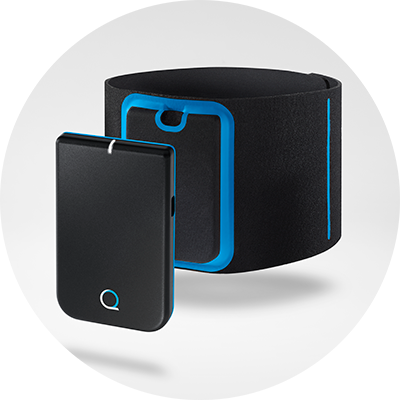
Quell Fibromyalgia is a thin wearable medical device that is inserted into a soft band, a disposable electrode is attached and then the band is placed on the upper calf. It is easy to use, wear and forget technology. The device comfortably stimulates sensory nerves to help relieve the symptoms of fibromyalgia without significant side effects.
READ MORETo learn more visit the Quell Fibromyalgia websiteQuell Fibromyalgia is an advanced, non-invasive, nerve stimulation device that is covered by 27 issued U.S. utility patents. It is the only wearable neurostimulator that is enabled by a custom designed microchip that provides flexible, precise, high-power nerve stimulation in a form factor the size of a credit card. Quell utilizes position and motion sensing to automatically adjust stimulation for an optimal patient experience both day and night. The device supports Bluetooth® low energy (BLE) to communicate with the Quell Fibromyalgia app, which is available for iOS and Android mobile devices.
The innovative Quell system is personalized to meet user needs and is smart enough to adjust therapy to changes during sleep and can even compensate for changes in the weather. Users have the option to personalize and manage their therapy discreetly via the Quell Fibromyalgia app, which offers therapy utilization, sleep and fibromyalgia severity tracking.